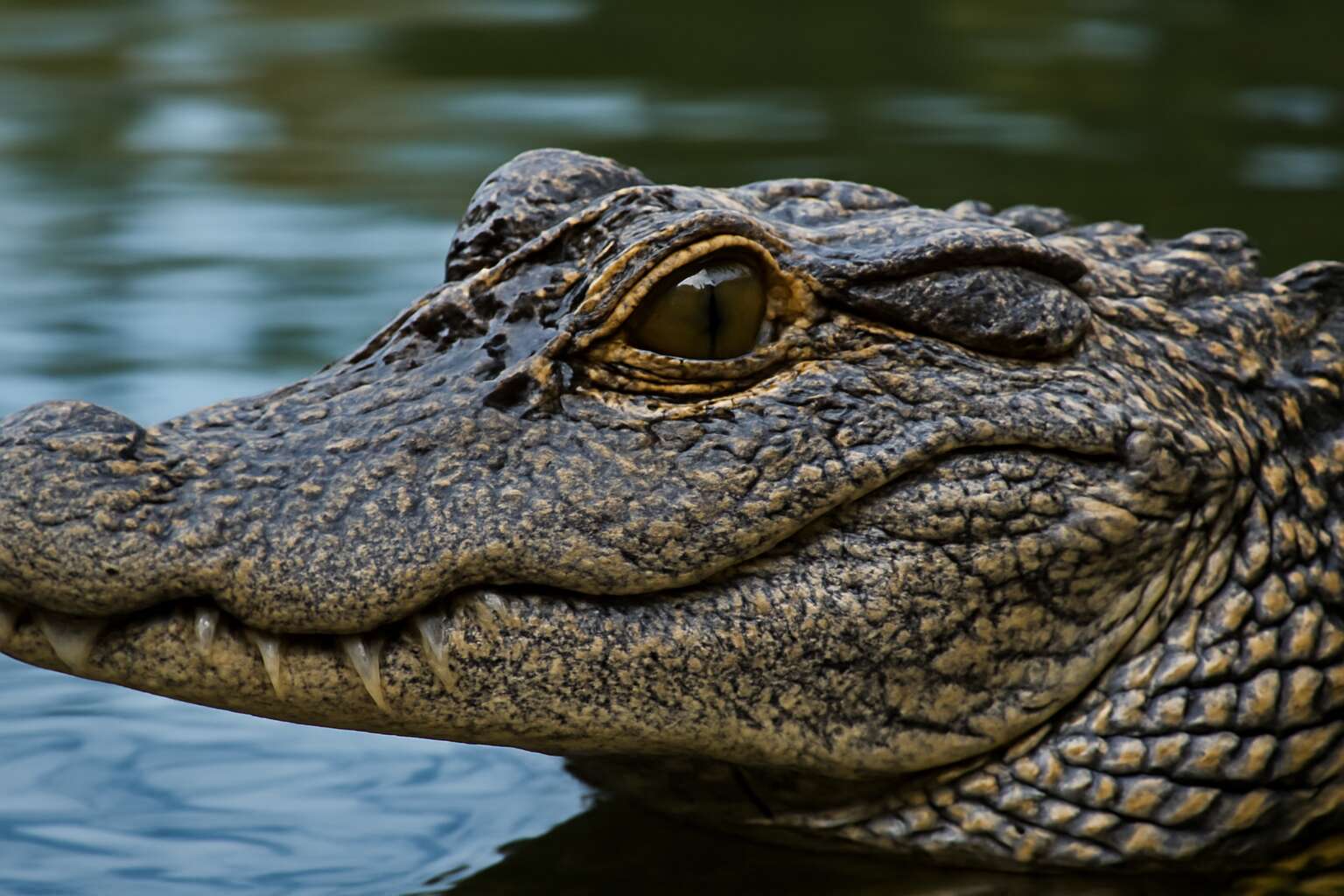
Crocodilian ear anatomy and hearing function
External ear and auditory openings basics
Sound is a predator’s compass along South Africa’s rivers, and crocodile ears keep perfect time with the current. In wetlands’ shadowy margins, their hearing maps unseen vibrations into a survival map.
External ear and openings basics are stark. The external auditory opening sits on the side of the head, shielded by scales, leading to the tympanum beneath the skin. No visible ear canal.
- External auditory opening sits on the side of the head.
- The tympanum lies beneath the skin with no external ear canal.
Their hearing favors low-frequency rumbles and waterborne tremors, signaling distant paddles or prey before sight. This ear design suits southern Africa’s wetlands—an amphibious sense at work when water mirrors land.
Middle ear structure and eardrum role
In the hush of South Africa’s wetlands, crocodile ears keep vigil with a patient, tidal cadence. The middle ear centers on the tympanic membrane, a taut drum pressed against the skull, and a single auditory ossicle—the columella (the reptilian stapes)—that bridges the drum to the inner ear. This compact chain channels watery ripples and air vibrations into neural signals, finely tuned to low-frequency cues that drift beneath the surface.
- Tympanic membrane: converts vibrations into mechanical energy that kick the ossicle.
- Columella (single ossicle): transmits and modestly amplifies motion toward the inner ear.
- Oval window and inner ear: where energy becomes nerve signals mapping pressure and movement.
This streamlined middle-ear design turns subtle pressure changes into a precise sensory map, a dark rhythm guiding a hunter through murky water.
Inner ear components and neural pathway
In the hush of South Africa’s wetlands, crocodile ears are not mere listening posts; they are patient sentinels. The inner ear houses a cochlear-like hearing organ paired with a compact balance system. Hair cells transduce pressure waves into neural signals, with a sensitivity to low-frequency cues that glide through water.
Key internal players include:
- cochlear-like hearing organ
- hair cells translating mechanical energy
- vestibular-like balance apparatus
- statoacoustic nerve
These elements funnel information to the brainstem, creating a neural map of movement and sound. Signals travel along the auditory nerve to brain regions that compare timing and intensity, guiding rapid, context-aware responses to splashes, rustles, and distant disturbances.
From there, the neural cascade climbs toward midbrain centers where sound and motion are integrated, enabling a strike with timing as precise as the hunter’s shadow on the water.
Auditory nerve and brain connections
Across South Africa’s reed-fringed wetlands, crocodile ears are more than listening posts; they’re the animal kingdom’s early-warning system. The auditory nerve carries signals from hair cells up into the brainstem, where timing and intensity are weighed with brutal efficiency. From there, a neural map guides a rapid, context-aware response to splashes, rustles, and warning rumbles across the water.
From the brainstem onward, the journey is crisp and purposeful. The core waypoints that connect ear to action include:
- Statoacoustic fibers ferry mechanical energy to the brain.
- Brainstem nuclei compare timing and loudness to flag true threats.
- Midbrain centers like torus semicircularis fuse hearing with motion cues.
- Motor circuits translate timing into coordinated jaw and neck movements.
That cascade makes crocodile ears superbly tuned for ambush and survival.
Key terms and anatomy glossary
In the reed-woven margins of South Africa’s wetlands, crocodile ears are water-born sentinels, translating ripples into reconnaissance and shadows into strategy. Their hearing function feels like a tide itself—a patient whisper that becomes a spear the moment it hears a splash or a distant rumble.
Inside this compact marvel, vibrations ride the skull and reach a refined sensor sheet that favors low, distant drumbeats over mere noise. The geometry of the ear bricks a path from water to brain with quiet economy, letting crocodile ears sift sound from silence and respond with startling speed.
- Waterborne vibrations travel through the jaw and skull, providing robust cues in murky waters
- The sensory sheet is tuned to low-frequency signals typical of distant movement
- Timely interpretation of these cues drives rapid, deliberate ambush responses
Thus, crocodile ears stand as patient diplomats of the marsh — ready, waiting, and precise.
Hearing in water and on land: crocodilians’ auditory adaptations
Waterborne sound detection and transmission
Sound travels roughly four times faster in water than in air, and crocodile ears are tuned to pick up the faintest ripples on the surface. In South Africa’s rivers and wetlands, crocodile ears enable rapid detection of approaching prey or rivals long before a visual cue appears.
In water, key cues include:
- Low-frequency vibrations transmitted by water and surface ripples
- Skull- and jaw-conduction paths that guide cues to receptive zones
- Distinct disturbances from prey or predators that travel toward shore
On land, airborne cues take on greater importance, but vibrations traveling through the body still reach sensory processing centers. Across SA habitats—from floodplains to coastal estuaries—this dual capability gives these predators an edge when visibility is poor or shadows move through reeds.
Airborne hearing for terrestrial trips
Water carries whispers four times faster than air, and rivers keep their secrets in motion. In the murmur of reeds, hearing becomes a hunter’s edge that’s less about sight and more about invisible signals.
The crocodile ears translate water-borne cues into swift awareness: faint surface ripples, slow tremors in the current, and the distant thrum of approaching prey.
- Subtle surface disturbances that travel toward shallows
- Low-frequency trains of waves from movement underwater
- Background noise that hides rather than reveals intent
On land, airborne cues assume greater importance, but vibrations ripple through the body to reach processing centers anyway. Across SA wetlands, this dual hearing system keeps crocodile ears tuned for shadows among reeds and on the riverbank.
Vibrational cues and substrate conduction
Water carries whispers four times faster than air; in South Africa’s reed-choked wetlands, crocodile ears keep two intimate conversations going: water’s whisper and earth’s tremor. In water, Vibrational cues and substrate conduction turn surface ripples, lingering currents, and distant thumps into signals the animal can read with astonishing clarity. The head acts as a listening chamber, skull and jaw guiding the tempo of sound to the inner systems that pay attention when prey moves unseen.
- Subtle surface disturbances traveling toward shallows
- Low-frequency waves from movement underwater
- Ambient noise that sharpens or masks intent
On land, airborne cues gain urgency, but vibrations still travel through the body, singing through bones to the brain. This dual listening shapes a creature forged by rivers and banks, a blurred line between hunter and dreamer in South Africa’s wetlands.
Frequency range and sensitivity
Hearing in water and on land is built into crocodile ears for South Africa’s reed-choked wetlands where whispers travel in different ways. The frequency range spans from low rumbles to mid-range tones, with acute sensitivity to waterborne vibrations. In water, the head acts as a listening chamber, skull and jaw guiding sound into the inner ear, so distant ripple and prey movement become readable signals.
- Underwater cues lean on low-frequency rumbles and surface disturbances that ride along currents.
- On land, airborne sounds still reach the ear, but bone conduction via the skull keeps vibrations coherent.
- Sensitivity is tuned to motion and pressure changes, enabling crocodile ears to pick winners from the noise.
Across habitats, this dual sensitivity makes crocodile ears a cornerstone of ambush strategy in South Africa’s wetlands.
Impact of habitat noise on hearing
In the reed-choked wetlands of South Africa, crocodile ears aren’t mere curiosities—they’re precision listening rigs. The air hums with wind and whispers, yet ambush-ready signals stand out like neon in a swamp. It’s a masterclass in multitask hearing.
Underwater hearing relies on the head as a listening chamber; skull and jaw funnel vibrations toward the inner ear. Distant ripple and prey movement become readable signals.
- Low-frequency rumbles ride along currents.
- Surface disturbances translate into waterborne cues.
- Substrate-borne vibrations travel through the skull to the inner ear.
On land, airborne sounds still reach the ear, but bone conduction via the skull keeps vibrations coherent. Habitat noise—wind, water, and chatter—can blur signals, yet crocodile ears stay tuned to motion and pressure changes, making ambushes effective in both realms. Crocodile ears embody a dual-sensitivity design that thrives in South Africa’s wetlands.
Evolution and comparative biology of crocodilian hearing
Phylogenetic context and fossil evidence
Crocodile ears sit at the crossroads of deep time and swamp-smart biology. In the archosaur family tree, crocodilians cling to a basal line shared with birds and extinct dinos, yet they boast an ear design tuned for both water and horizon-scan. Fossil clues suggest tympanic membranes and middle-ear linkages appeared early, giving archosaurs a broad frequency sense long before modern crocodiles prowled the rivers.
Key fossil hints include:
- features around the skull that indicate external hearing access
- bone articulations pointing to a shared archosaur auditory pathway
- evidence for sensitivity to low-frequency cues typical of aquatic life
Across Africa, including South Africa’s river complexes, this ancient tuning continues to adapt.
Comparisons with alligators and gharials
Crocodile ears are not just passive receivers; they are weathered instruments tuned to swamp rhythms. In the fossil record and field observations, these sensors map soundscapes that stitch water and land into one audible continuum—a knack that helped archosaurs survive across continents.
Compared with alligators and gharials, crocodile ears show nuanced adaptations: broader low-frequency sensitivity that suits river murmurs, plus a more compact middle-ear channel that preserves signal integrity when the jaws snap.
- Shared archosaur heritage links their auditory pathways to distant relatives
- Waterborne cues and substrate vibrations are prioritized in a way that suits riverine living
- African habitats shape the tuning, balancing stealth and horizon scanning
In South Africa’s wetlands, this ongoing tuning keeps crocodile ears primed for both currents and distant horizons—an evolutionary signal that still whispers through every ripple.
Developmental stages of the ear
‘Sound is the river’s memory,’ and crocodile ears carry that memory through time. Evolution threads archosaurs into a shared orchestra, where hearing keeps pace with shifting wetlands. In South Africa’s reeds and rivers, crocodile ears reveal a patient tuning—able to read ripple, wind, and distant horizon as a single audible map.
Development unfolds in staged whispers, from egg to adult.
- Embryonic otic region forms the hearing blueprint
- Chambers and membranes grow, shaping signal paths
- Neural maps refine and connect sound to action
This quiet ascent mirrors a crocodile’s life, from patient ambush on the bank to river-crossing vigilance.
From field notes to fossil traces, researchers trace this earcraft through riverscapes and bone, revealing a survival chorus that keeps Africa’s wetlands alive in memory.
Adaptive advantages of their ear design
“Sound is the river’s memory,” I carry this line like a talisman as crocodile ears catch every ripple in the reedbed. Evolution threads a remarkable bridge between land and water: the ears inherit a shared archosaur hearing, a quiet testimony to millions of years of adaptation.
In their ear design, simple bones and a resilient tympanic membrane fuse into a listening system that treats water’s murmur and air’s whisper with equal regard. Underwater, low-frequency calls become clear through bone conduction and a compressible tympanum; in air, the same membrane and skull transmit signals with surprising precision, supporting patient ambush and swift pursuit.
- Enhanced low-frequency detection across air and water
- Robust tympanic structure resists debris and pressure
- Skull conduction links substrate vibrations to sound perception
Molecular insights into hearing mechanisms
“Sound is the river’s memory,” a line I carry into every page about crocodile ears, where air and water braid listening into a single craft. Across Africa’s wetlands, these ears trace echoes from streams and reeds, a testament to millions of years of shared archosaur ancestry.
From molecular perspectives, the listening system thrives on bone conduction and a supple tympanic membrane that channels low frequencies through water and air alike. This dual-channel design allows the crown of a predator to sense distant calls and near-substrate vibrations with quiet precision.
- Bone-case coupling mirrors early archosaur sensors
- Elastic membranes preserve signal in debris-rich habitats
- Skull pathways fuse substrate ripples with airborne cues
In evolution and comparative biology, crocodile ears reveal a bridge from ancient swamps to modern savannas, a symphony of structure and function played across generations.
Practical insights, behaviors, and conservation
Observing ear-related behaviors in the wild
River hush, a heartbeat under water: crocodile ears pick up the faintest ripple long before a shadow surfaces. Across South Africa’s wetlands, these listening talents turn ambush into art, translating waterborne whispers into patient, precise strikes. This quiet advantage keeps pace with the river’s cadence, a trusted sign for guides and trackers alike.
Observing ear-related behaviors in the wild yields tangible clues for researchers and visitors alike:
- Head tilts to triangulate the sound
- Posture pauses after a ripple
- Quiet, deliberate approach before a strike
Conservation angles: safeguarding listening rivers in South Africa requires quiet water habitats and mindful tourism. Reducing boat noise, protecting riverbanks, and preserving estuary soundscapes help maintain the hearing ecology that these predators rely on. A healthier chorus means longer, more natural life in these iconic waterways.
Myths about crocodile hearing versus science
A single ripple can decide ambush or escape—field notes from South Africa’s wetlands show crocodile ears detect waterborne cues in as little as 0.2 seconds, turning quiet waves into patient, precise strikes.
Practical insights flow from the listening ecology. In these rivers, crocodile ears pick up faint cues that escape the eye, guiding stealthy approaches. Even modest changes to the soundscape—engine noise, paddled boats, or distant thunder—can mask signals, reshaping predator-prey timing.
Conservation myths collide with science: crocodile ears respond to both underwater and airborne cues, and habitat noise disrupts their listening chorus. Quiet waterways and mindful tourism help sustain this ancient listening lifeway.
How conservation supports auditory health
In the quiet bends of South Africa’s wetlands, crocodile ears register waterborne ripples in 0.2 seconds, turning silence into a surgical strike!
Practical insights flow from their listening ecology. In the field, these ears pick up faint cues that elude the eye, guiding stealthy approaches. Even small shifts in sound—boat paddles, distant thunder, or engine hum—can blur signals and shift predator-prey timing. Conservation actions that preserve quiet waterways support auditory health, helping these ears sustain their ancient listening lifeway.
Common questions about crocodile hearing: FAQs
Across South Africa’s wetlands, crocodile ears register waterborne tremors in roughly 0.2 seconds, turning quiet currents into a hunter’s map. This ancient listening lifeway shapes every movement near the reeds, a reminder that sound threads through survival as surely as sight threads through a hunter’s gaze.
Practical insights emerge from their listening repertoire:
- Subtle cues from distant paddles or engine hum reshape timing.
- Wind shifts and rain alter sound propagation, sharpening or blurring signals.
- Clear sound corridors near reeds support stealthy approaches.
FAQs about crocodile ears:
- Q: Do crocodile ears hear airborne sounds? A: They sense both, with water cues dominant.
- Q: Can habitat noise affect hearing? A: Yes, it can mask signals and shift timing.
- Q: Why does this matter for storytelling? A: It frames wetlands as living audio theatres.
Educational resources and further reading
Across South Africa’s wetlands, crocodile ears can register waterborne tremors in roughly 0.2 seconds, turning quiet currents into a hunter’s map.
Practical insights bloom from this listening repertoire: distant paddles or engine hums reshape timing; wind shifts and rain bend sound paths; reeds carve clear corridors that sustain stealth.
Educational resources and further reading anchor this field, inviting deeper study without losing sight of living habitats.
- SANBI publications on soundscapes and hearing
- University research journals from KwaZulu-Natal and Pretoria on waterborne acoustics in crocodilians
- Field guides and audio-visual documentaries from South African parks and conservancies
- Conservation.org or WWF-SA resources on habitat health and auditory ecosystems
These readings frame wetlands as living audio theatres—an invitation to notice the music in the reeds.

0 Comments