Crocodile overview and definition
Crocodile definition and how they differ from other reptiles
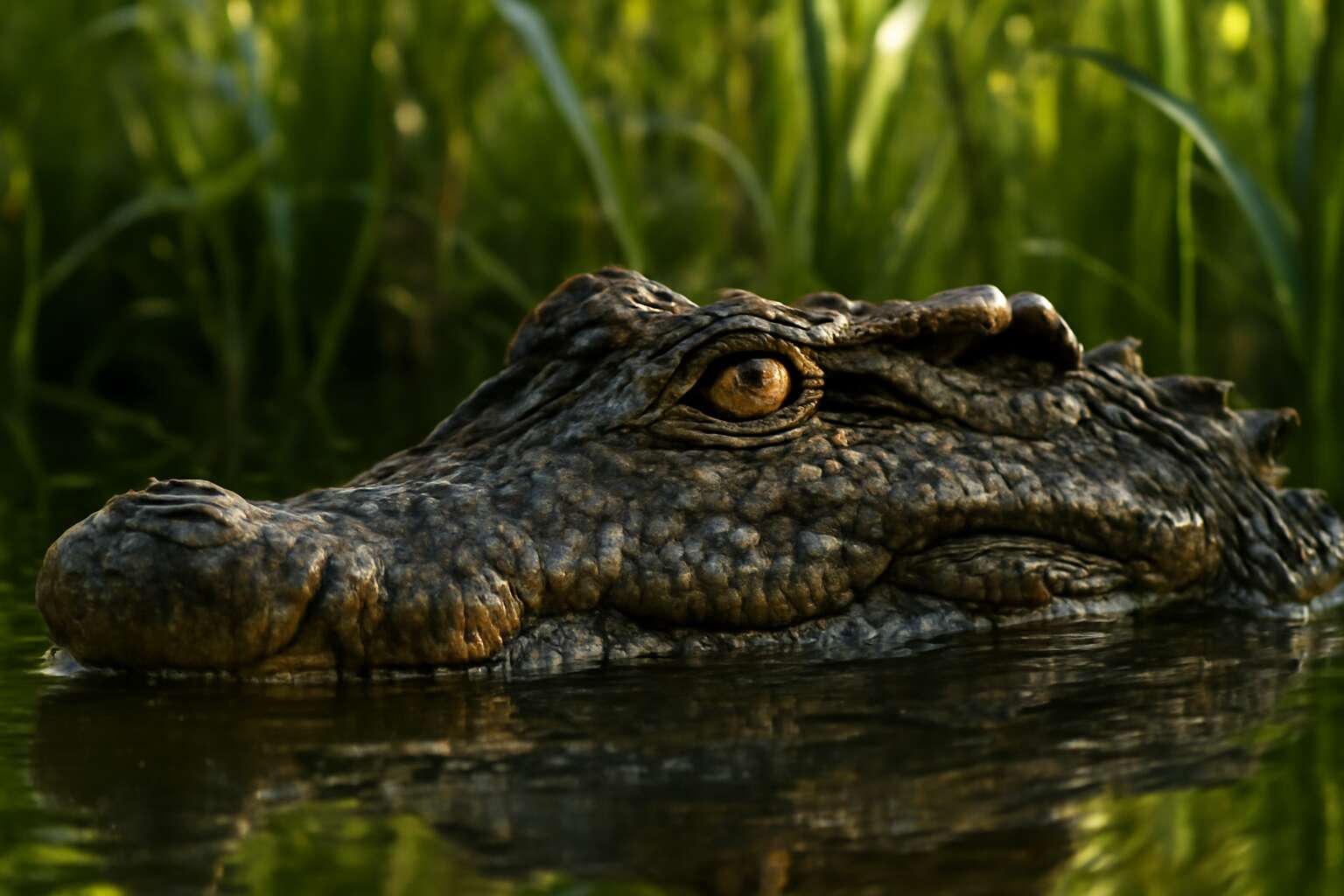
The question ‘what is a crocodile’ cuts to the point: a prehistoric predator that still stalks Africa’s waters. Crocodiles have roamed for roughly 200 million years, with tough, scaly armor and a jaw that can crush in a heartbeat. They lie in river shallows, eyes above water, waiting as prey drifts by in South Africa’s wetlands!
Definition-wise, crocodiles are reptiles in the order Crocodylia. They are distinct from lizards and snakes by their elongated snout, robust tail, and a bite that can deliver astonishing power. They thrive in warm habitats and are efficient ambush predators, a combination that sets them apart from many other reptiles.
Here are a few key distinctions from other reptiles:
- V-shaped snout with teeth visible on both jaws when closed
- Salt glands on the tongue help cope with seawater
- Aquatic ambush predators with a powerful bite
Key identifying traits of crocodiles
Across Africa’s waterways, where sunlight trembles on reed beds, a prehistoric hunter keeps watch just below the surface. It asks what is a crocodile, and the answer is an ancient predator still stalking South Africa’s wetlands with armored skin and a jaw that can snap shut in a heartbeat.
On the bank, patience is power. They rise with the sun, perfectly camouflaged in murky shallows, and strike with sudden, sculpted force.
- Elongated snout with teeth visible along both jaws when the mouth is closed
- Salt glands behind the tongue support brackish-water life
- Stout, muscular tail and a body built for explosive propulsion
- Aquatic ambush predators relying on stealth and powerful bursts
In South Africa’s wetlands, these traits form a living bridge to ancient oceans, a reminder that the natural world writes legends in scales and soundless patience.
Crocodile taxonomy and natural history
Across Africa’s waterways, crocodiles loom as ancient silhouettes, armored and patient. A natural question—what is a crocodile—points to a living fossil dating back roughly 200 million years, still patrolling South Africa’s wetlands with a moonlit grace.
Taxonomically, crocodiles belong to Crocodylia, split among families Crocodylidae, Alligatoridae, and Gavialidae. In southern Africa, the iconic Nile crocodile Crocodylus niloticus shapes rivers and reserves, while other archosaurs roam in adjacent habitats, echoing ancient ocean legends.
Natural history reveals a creature built for stealth and endurance: eyes and nostrils positioned for surface ambush, a four-chambered heart, and a tail that powers sudden bursts. They nest on sunlit banks, guard clutches, and hatchlings fledge in leaf-strewn margins of our wetlands.
Common crocodile species overview
Across southern Africa’s shimmering waterways, what is a crocodile but a masterclass in ancient efficiency? A living fossil with modern abrasion, this apex ambusher keeps its tempo on the surface and below it, patiently rehearsing the art of the strike. Elegantly armored, surprisingly fast, and forever misjudged as lazy by the untrained eye.
The Nile crocodile is the region’s most recognizable large predator, but a few other species quietly populate Africa’s wetlands. Here are a few you might hear mentioned in field guides:
- Nile crocodile (Crocodylus niloticus) — the region’s large, adaptable river predator.
- Dwarf crocodile (Osteolaemus tetraspis) — small, forest-dwelling and reclusive.
- Slender-snouted crocodile (Mecistops cataphractus) — narrow snout, varied habitats.
Physical anatomy and adaptations
Skull structure and jaw mechanics
From the sunlit banks of South Africa’s rivers to reed-lined shadows where ambush is an art, what is a crocodile reveals itself in motion! These ancient predators blend patience with power, a stubborn craft of survival.
Its skull is elongated and rigid, a fortress that anchors a jaw capable of a sudden, crushing bite. The teeth interlock like masonry, ensuring grip even when prey twists. The head’s clamp is powered by strong muscles and a palate that breathes beneath.
- Eyes and nostrils set high on the head to monitor prey while the body hides underwater.
- Thick, osteoderm-covered skin shields against rough riverbeds.
- A powerfully muscled tail drives swift bursts of speed.
With that jaw strength in mind, a crocodile’s anatomy shows a secondary palate, a protective nictitating membrane, and a jaw hinge that unlocks a relentless clamp—an adaptation system built for life on the edge of water and land.
Body armor, scales, and skin adaptations
In South Africa’s rivers and wetlands, crocodylians endure for decades—some past 70 years. Understanding what is a crocodile reveals a creature cloaked in practical armor that supports ambush tactics. The body armor begins with osteoderm plates beneath a dense layer of scales, creating a tough, flexible shield that resists riverbed scrapes. The skin is thick, yet balanced for heat exchange, keeping the animal cool and ready for a sudden burst of movement.
What follows are the skin and scale traits that keep a crocodile resilient on the water’s edge:
- Osteoderm armor beneath tightly knit scales provides durable protection with flexibility!
- Keratin-rich skin minimizes water loss and resists wear from sediment and vegetation
- Camouflage hues—olive, brown, and gray—blend with riverbanks and murky waters
These skin features are a quiet, decisive edge in a predator’s toolkit.
Tail function and locomotive capabilities
Physical anatomy and adaptations shape a crocodile’s life along South Africa’s rivers. The body is a low-slung, armored machine built for stealth and surge: a long, columnar spine, a broad snout, and a tail that acts as a water-woven rudder. The tail is a muscular engine, delivering explosive thrust in the blink of an eye, while the hind limbs—short, webbed, and powerful—offer balance on riverbanks and traction in mud. So, what is a crocodile? It is a patient ambusher honed for water and shore.
- Tail propulsion drives rapid ambush bursts in open water
- Webbed hind limbs aid steering and quick turns
- Eyes and nostrils project above waterline for surveillance
On land, the creature uses a deliberate, rolling gait, relying on the tail to pivot and push forward. In water, buoyancy and a compact chest keep it balanced for stealthy strikes.
Senses and feeding adaptations in crocodiles
What is a crocodile? A patient hunter sculpted for river life. The skull stretches long, with a jaw designed to grip and crush. Its armored skin—thick scales and a tough, flexible hide—shields the body as it glides through still water and lands with measured, brutal calm.
Feeding adaptations blend stealth with power. Senses extend beyond sight: snout and eye regions cue prey, nostrils remain aware of surface activity, and a network of pressure sensors along the snout lets the animal feel ripples.
- Conical teeth that grip prey and resist tearing
- Powerful jaw muscles for a crushing bite
- Dermal pressure sensors along the snout for water vibrations
- Ambush strategy that turns still water into a sudden strike
In South Africa’s rivers, these traits weave a quiet reality: a patient, river-born survivor with a hunter’s heart and a river’s grace.
Habitat, range, and behavior
Geographic distribution and natural habitats
In South Africa’s rivers and wetlands, crocodiles patrol like seasoned fortune-tellers of danger. A common question is what is a crocodile, and the answer is a patient ambush predator with armored skin and a jaw that snaps shut in a heartbeat.
They favor slow rivers, floodplains, and permanent lakes, though they tolerate brackish estuaries near coastlines. When they hunt, they rely on stealth and patience rather than speed—an art to master in the heat of a South African late afternoon.
- Freshwater habitats: major river systems such as Limpopo, Olifants, and Komati
- Estuaries and coastal wetlands
- Floodplains and marshes that seasonally fill with water
Geographic distribution in southern Africa centers on warm, shallow waters. In South Africa you’ll find Nile crocodiles in eastern river basins and some coastal lagoons, thriving where water endures the heat and provides ample hunting grounds.
Behavior patterns and social structure
Across Southern Africa’s sun-scorched waterways, the Nile crocodile commands the river—a patient throne in heat and shadow. A mature ambush predator can exceed four meters, its armored hide a living fortress. But what is a crocodile? It is a patient hunter cloaked in ancient resilience, jaws snapping shut in a heartbeat as the water shivers at the strike.
Habitat and range mingle like dusk and current: freshwaters of Limpopo, Olifants, and Komati, plus estuaries and floodplains that glow with life. In South Africa they favor warm, shallow waters—from eastern basins to coastal lagoons—where heat and hunting grounds converge.
- Crepuscular hunters who wait with patient calm.
- Mostly solitary adults; breeding seasons draw short, temporary gatherings.
- Basking as a social, thermal ritual along sunlit banks.
These threads weave a simple social fabric: adults hold territories, while mothers guard nests and guide hatchlings before the river claims them again.
Thermoregulation and daily activity cycles
In Southern Africa’s sunlit rivers and floodplains, crocodiles stake a throne along warm, shallow waters and estuaries. what is a crocodile? A patient hunter cloaked in ancient resilience, it lounges on mud banks or slides beneath the surface, heat gathering as the day grows. The Limpopo, Olifants, and Komati basins frame a landscape where sun, water, and scales converge.
Thermoregulation and daily activity cycles unfold with deliberate cadence. They bask to raise body temperature, then retreat to shade or water to cool. Crepuscular by temperament, they prime for ambush at dawn and dusk, with occasional bursts at midday during hot spells.
- Bask to raise temperature
- Cool in water to regulate heat
- Active ambush at dawn and dusk
Across South Africa, warm, shallow freshwater systems—rivers, floodplains, and estuaries—shape this reptile’s daily rhythm, pairing patient waiting with seasonal change.
Human interactions and safety considerations
What is a crocodile? In Southern Africa, these ancient river kings stalk warm, shallow waters along the Limpopo, Olifants, and Komati basins. Nile crocodiles can live up to 70 years in the wild, a longevity that explains their patient, sun-loving routines and formidable presence on riverbanks.
Habitat and range keep these reptiles glued to warm freshwater—rivers, floodplains, estuaries. They bask on mud flats, slip beneath cloudless surfaces, and drift through estuarine channels with a hunter’s patience. They’re crepuscular, preferring dawn and dusk ambushes and occasional midday bursts during heat waves.
Human interactions and safety considerations in South Africa demand respect for signs, distance, and no feeding. Coexistence hinges on awareness and caution. Here are quick dos and don’ts:
- Do not swim or wade in crocodile habitats.
- Do not feed or harass crocodiles; give them space.
- Keep children and pets well back from river edges.
Respect the river’s oldest resident—and you’ll keep this awe-inspiring ecosystem thriving.
Migration and seasonal movements
In the sun-warmed waterways of Southern Africa, crocodiles cling to warm freshwater—rivers, floodplains, and estuaries—that sustain a patient, sun-loving life. Their range threads the Limpopo, Olifants, and Komati basins, along muddy banks where shade and prey gather. So, what is a crocodile—think patient, ancient hunter—a predator built for stealth and timing, a river sentinel whose presence anchors the ecosystem and hints at a river’s ancient rhythm.
Behavior centers on ambush and seasonal patience. They are crepuscular—active at dawn and dusk—often lingering in sunlit mud banks during cooler spells. Migration and seasonal movements hinge on water: floods create fresh corridors; droughts compress life to cooler pools and estuarine pockets that offer escape and sustenance.
- Seasonal flooding prompts dispersal along newly connected waterways.
- Dry-season retreats concentrate them in deeper channels and estuary mouths.
- Juveniles ride floodplains, seeking unclaimed territories.
- Temperature cues govern basking and feeding windows across the day.
Diet, hunting strategies, and prey
Typical diet across age and species
What is a crocodile? To explore what is a crocodile, consider its diet at the water’s edge—opportunistic, carnivorous, and remarkably adaptable across South Africa’s wetlands.
Hunting strategies hinge on patience and precision. They lie in wait with eyes, nostrils, and a sliver of shadow, then lash out in a blink to seize prey and submerge it, using heat sensing and ripples to close the gap!
Prey and diet shift with age and species. Juveniles favor small fish and amphibians; subadults add larger fish and birds; adults chase bigger mammals and opportunistic carrion when rivers run low.
- Juveniles: small fish, crustaceans, amphibians
- Subadults: larger fish, birds, small mammals
- Adults: larger mammals, carrion
Aquatic hunting tactics and ambush methods
So, what is a crocodile? An ancient, armor-plated predator that prefers the shallows to the open sea. In South Africa’s wetlands, it lies nearly motionless, eyes and nostrils just above the water, a patient hunter with a blink-quick strike—amazing how fast nature can blink!
Diet hinges on opportunism and aquatic prowess. They stalk fish, amphibians, and birds from the water’s edge, ready to lunge when heat or ripple betrays prey. Patience and precision outshine speed.
- Low-profile silhouette with only eyes and snout visible at the waterline
- Heat-sensing pits and ripple cues guiding a sudden, accurate lunge
- Drag-and-submerge technique to finish the meal underwater
Prey preferences shift with opportunity: small to medium fish and amphibians give way to larger targets when rivers run low, and even carrion becomes a last-resort nibble for a seasoned ambush predator.
Impact on ecosystems and prey dynamics
In South Africa’s wetlands, what is a crocodile? A patient, opportunistic feeder whose diet skims small fish, amphibians, and wading birds, ready to lunge when heat or ripple betrays prey. They haunt the water’s edge, turning stillness into a silent, deadly feast.
Hunting strategies favor restraint over speed: they stage themselves at the margin, letting currents and shadows do the work, and strike with surgical timing when a target reveals itself.
- Prey suppression stabilizes fish populations and keeps niches open
- Scavenging recycles nutrients, supporting plants and invertebrates
- Birds, amphibians, and smaller mammals adjust their behaviors near water
Their presence shapes the river’s food web, guiding which species rise or fall, and nudging whole communities toward balance.
Misconceptions about crocodile feeding
In exploring what is a crocodile, a patient carnivore prowls South Africa’s wetlands, its diet skimming fish, amphibians, and wading birds—an opportunist with a quiet appetite that waits for heat to betray its prey!
Diet and hunting intertwine; I observe restrained ambushes along the margin, letting current and shadow do the casting. When a glint of movement signals prey, the strike is precise, not hurried—timing that feels almost surgical.
Misconceptions about feeding haunt the banks:
- Myth: they feed only on fish.
- Myth: they drag prey into deep water to consume.
- Myth: they cannot hunt effectively from the shore.
In truth, feeding is opportunistic and adaptable, a patient ritual that respects weight and weather.
Feeding behavior in captivity vs wild
In South Africa’s wetlands, what is a crocodile? The answer is a patient predator, a reed-thin silhouette that waits in heat and shadow. Diet and hunting weave together in a ritual of patience, precision, and a quiet, almost surgical strike.
In the wild, meals arrive from fish to amphibians and wading birds, seized with a flash when warmth lifts the water’s veil. In captivity, meals come on schedule, framed by care and enrichment that keep reflexes sharp while limiting risk to people.
- Wild diet: diverse, seasonal, unpredictable prey
- Captivity: controlled portions, consistent feeding times
- Enrichment: feeding challenges mirror hunting without danger
From the riverbank, I watch the patient patience at work. The prey dynamics echo through the marsh—ambush, restraint, and the occasional pulse of victory. The crocodile remains apex, its appetite tempered by weight, weather, and the river’s steady hum!
Reproduction, life cycle, and conservation
Mating behavior, courtship, and reproduction
Nesting, eggs, and incubation period
In discussing what is a crocodile, you encounter an ancient survivor—these creatures have stalked Earth for roughly 200 million years—and they begin life in a clutch of eggs, progressing through a patient, multi-stage life cycle into riverine monarchs. In South Africa, reproduction follows seasonal rhythms and warming waters.
Nesting takes place on sunlit banks or damp vegetation, with females laying 30–60 eggs in a mound. Incubation lasts about 70–90 days, and temperatures influence hatchling sex. After emergence, the mother often stays nearby to guard the tiny youngsters.
- Clutch size: 30–60 eggs
- Incubation: ~70–90 days
- Parental care: mother guards hatchlings
From hatchlings to juveniles and then adults, the life cycle maintains river balance. Conservation hinges on protecting wetlands, reducing conflicts, and enforcing protections that keep crocodiles part of South Africa’s ecological heritage.
Juvenile development, growth, and survival
Ancient, patient, and efficient, crocodiles have endured roughly 200 million years. So, what is a crocodile? A master of river economies—a survivor that begins life in a sun-warmed clutch and climbs through a slow, purposeful life cycle.
In South Africa’s seasonal wetlands, reproduction centers on sunlit banks where a female guards a nest until hatchlings emerge. The sequence unfolds in warmth, with hatchlings slipping into water under their mother’s watchful eye.
Juvenile development is brutal; the first years decide everything. I’ve watched hatchlings cling to reeds, learn ambush from lurking adults, and slowly grow into capable predators. A few growth milestones—swiftness, stealth—shape their survival.
- Juvenile vulnerability and maternal proximity
- Growth milestones and learning ambush tactics
- Survival as a reflection of river health
Conservation hinges on safeguarding wetlands, upholding protections that keep crocodiles part of South Africa’s ecological heritage.
Conservation status, threats, and protection efforts
Reproduction in South Africa’s seasonal wetlands unfolds with patience. what is a crocodile? A master of life cycles, it begins on sun-warmed banks where a female guards a clutch until hatchlings slip into the river. The life cycle runs from newborns to stealthy juveniles and, over decades, to durable adults—written by temperature, rainfall, and river health.
Conservation status and protection hinge on habitat, water security, and wise stewardship. The Nile crocodile is globally listed as Least Concern, yet threats—habitat loss, water extraction, and pollution—still loom. In South Africa, protected areas and community monitoring buttress long-term viability.
- Habitat protection and river flow maintenance
- Anti-poaching and wildlife crime enforcement
- Protected areas and breeding programs
- Community engagement and ecotourism safeguards
Breeding programs and how to support conservation
Reproduction in crocodiles unfolds with patient care. Females guard sun-warmed nests on riverbanks, and hatchlings slip into the water as a lifelong cycle begins—shaped by heat, rainfall, and river health. To many, what is a crocodile becomes a story of resilience and risk.
Breeding programs aim to sustain genetic diversity and bolster wild populations. In South Africa, managed releases and careful monitoring help ecosystems remain balanced while these ancient hunters stay part of the landscape.
Support for conservation often centers on habitat protection, water security, and community involvement.
- Habitat protection and secure water flow
- Head-start and release trials with post-release monitoring
- Public education, ecotourism, and local stewardship
Conservation benefits from credible trusts, respectful visitation, and citizen science that tracks river health.

0 Comments