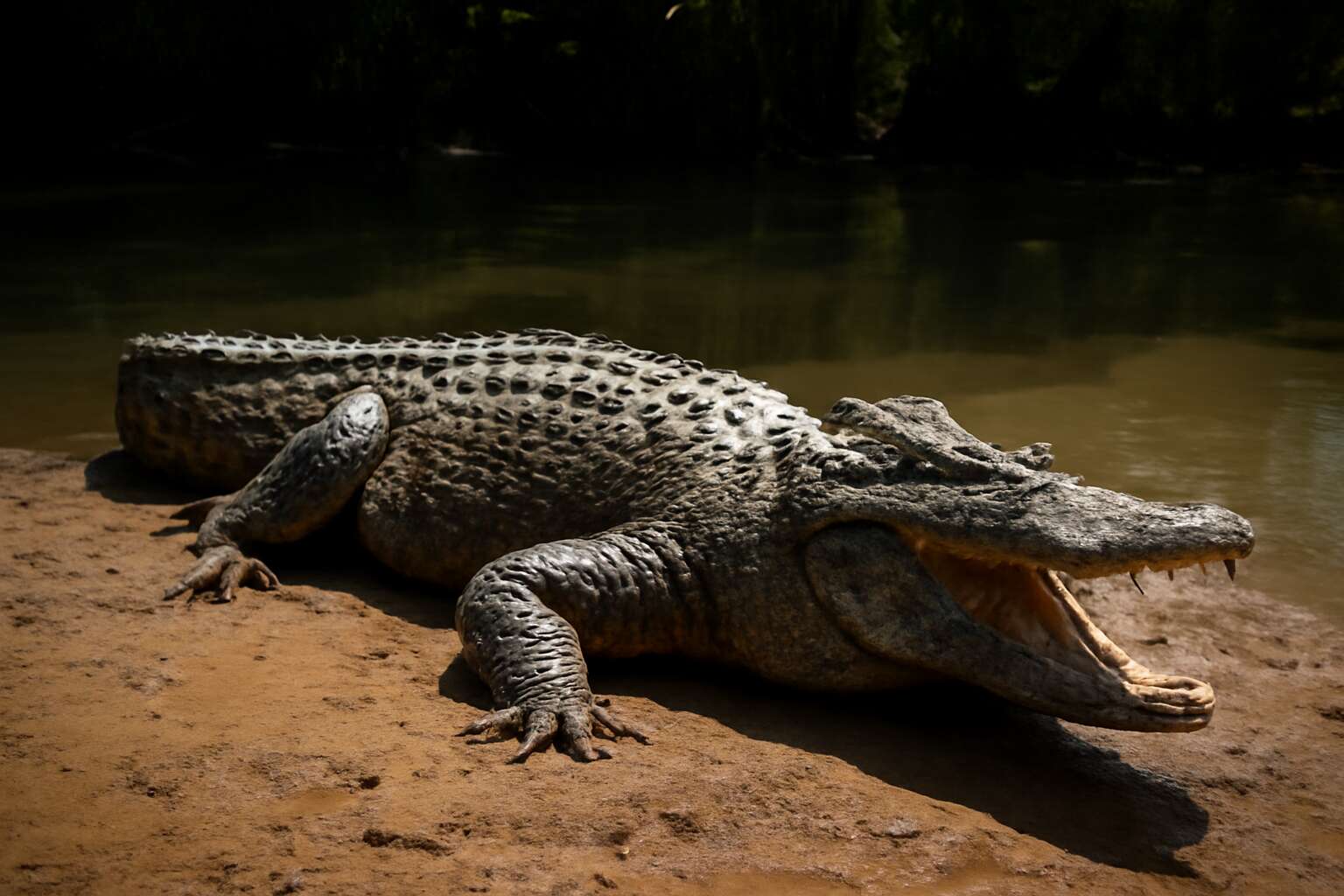
Comprehensive guide to crocodile size records
Largest crocodile size records and notable specimens
In this comprehensive guide to crocodile size records, the story glides from hatchling bravado to titanic silhouettes, where science and awe meet on the riverbank. Across the world, just a few surpass six meters in length, a figure that stirs awe. Measurement methods, habitats, and the patient art of noting growth are presented with precision and care.
Across the chronicles, the biggest crocodile ever recorded rises as a towering cipher of nature’s appetite for space and shadow.
- Lolong — 6.17 meters, Philippines
- Cassius — around 5.48 meters, Australia
These notable specimens illuminate the spectrum of size, reminding readers that every measurement carries a story of ecology, capture, and the wild’s stubborn grandeur—especially for South Africa’s own coastlines and rivers.
Such records fuel awe and scientific inquiry, inviting readers to ponder growth, ecology, and the habits of crocodiles in South Africa’s landscapes!
How scientists verify crocodile size and age
The river’s quiet mathematics rarely blinks, but the statistic remains arresting: the biggest crocodile ever recorded stretched to 6.17 meters, a silhouette that haunts riverbanks worldwide, including South Africa’s sprawling wetlands and deltas.
Comprehensive guidance on crocodile size begins with disciplined measurement and honest aging. Scientists measure length with stabilised rigs and calibrated tapes, correcting for curvature; they corroborate with photogrammetry and field notes that capture posture and habitat. Age estimation relies on sclerochronology: growth rings in bones and teeth, combined with known growth curves for the species.
- Direct capture measurements with the animal secured to minimize movement and curvature.
- Photogrammetric validation using multiple angles to cross-check tape data.
- Bone and tooth growth-ring analysis to estimate age and growth history.
- Contextual data like sex, habitat, and season to refine growth models.
Geographic distribution and habitat factors affecting growth
River lore aside, the biggest crocodile ever recorded stands as a benchmark, a ghostly ledger of river physics and appetite. It’s a statistic that makes biologists measure twice and storytellers gasp. In South Africa, it hints at habitat mosaics that let giants thrive.
Geographically, these giants favor sub-Saharan watercourses. South Africa anchors the eastern fringe, while the broader range sweeps through the Okavango, Limpopo, and coastal deltas where wetlands and seasonal floods feed growth.
A handful of habitat factors tilt growth toward record sizes:
- Prey abundance and caloric density
- Water stability and basking sites
- Temperature and seasonal cycles
- Habitat connectivity and nesting opportunities
- Human disturbance and pollution pressures
Growth patterns emerge from these variables, shaping where giants can persist and endure through changing climates.
Conservation, risks, and public safety around giant crocodiles
Stature meets mystery on Africa’s river margins—the biggest crocodile ever recorded looms as a living statistic, a reminder of river physics, appetite, and time compressed into one gliding shadow.
In a comprehensive guide to size records, conservation walking hand in hand with public safety reveals how these giants prompt careful land-use, watershed stewardship, and respectful coexistence among communities that share the water.
- Habitat protection and watershed-wide monitoring
- Long-term data integrity for age and size records
- Public education that fosters awe without fear
These threads weave a narrative where beauty meets caution, and where South Africa’s river mosaics remind us that every giant is a signal, not a threat.

0 Comments