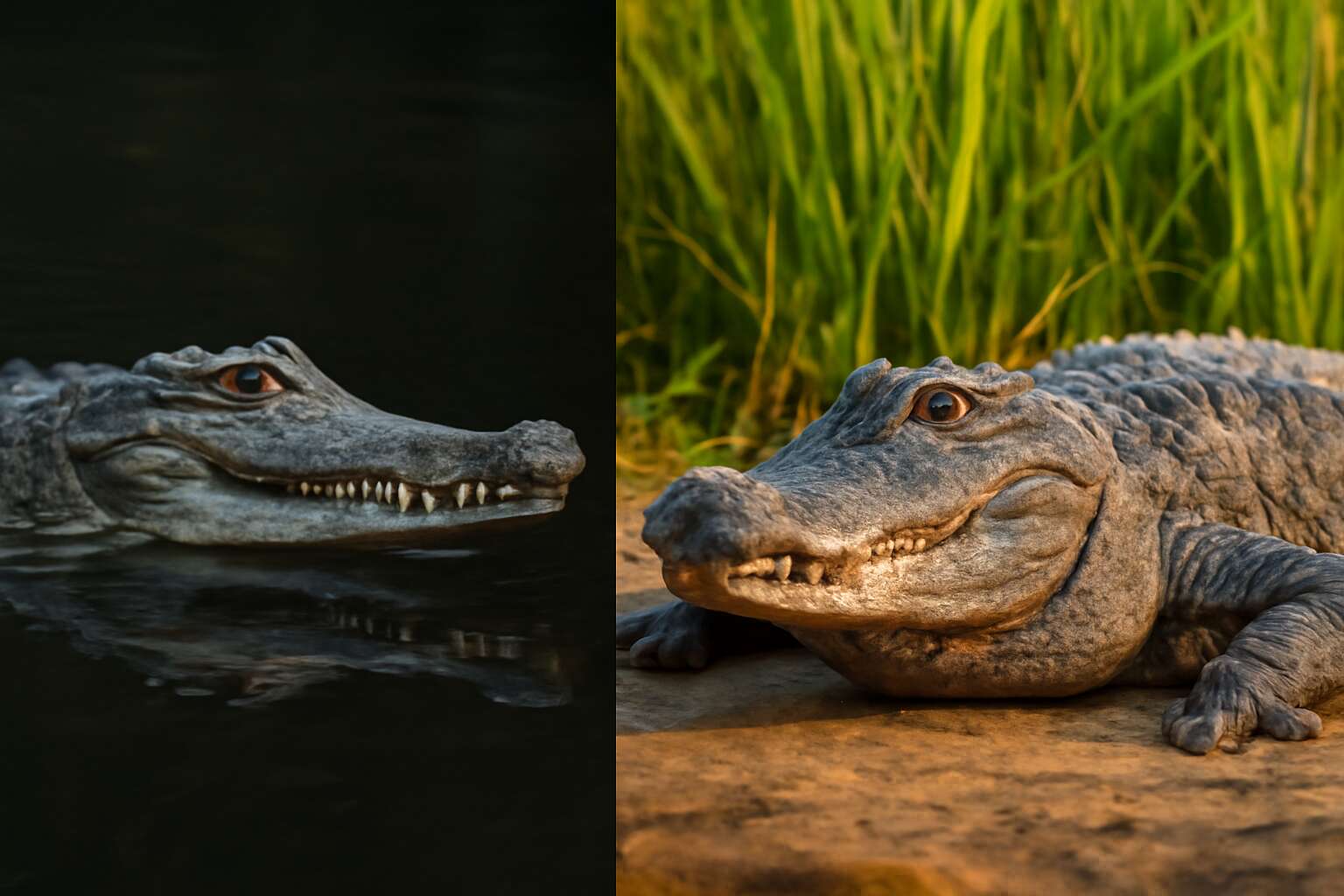
Crocodile vs Alligator Difference
Physical Characteristics and Identification
Two ancient silhouettes glide through Africa’s waterways, yet their stories diverge as sharply as their jaws. A wildlife guide once whispered, “Nature writes geometry,” and suddenly the crocodile alligator difference becomes a map you can read at a glance!
Crocodiles typically bear a long, pointed V-shaped snout; alligators sport a broad U-shaped jaw. When mouths close, crocodile teeth often show along the edges; alligators hide theirs. I watch shapes shift in the water, and the difference reads like a living diagram. That contrast is in the snout, teeth, and eyes.
Look for these cues:
- Snout shape: V-shaped for crocodile; U-shaped for alligator
- Teeth visibility with mouth closed: visible in crocodile, hidden in alligator
- Color and texture: darker olive tones for crocodiles, gray-green for alligators
In South Africa’s river landscapes, recognizing this language of their bodies elevates observation to art!
Habitat, Geography, and Distribution
‘Nature writes geometry,’ a guide once whispered, and I’ve learned to read that geometry in the crocodile alligator difference etched across Africa’s waterways. In South Africa, Nile crocodiles populate the major rivers and estuaries, while alligators are not native—an absence that maps a continent’s true predatory geography.
Where they dwell reveals a geography as telling as any guidebook.
- Nile crocodile: warm rivers, floodplains, and estuaries across sub-Saharan Africa
- American alligator: freshwater swamps and slow rivers in the southeastern United States
- Chinese alligator: small, temperate wetlands in eastern China
In South Africa’s waters, distribution reads like a living atlas: crocs thrive, alligators stay off the page. The crocodile alligator difference, then, is geography writ large—where water and climate permit life, and where they do not.
Behavior, Diet, and Interactions
In the charged hush of Africa’s waterways, the crocodile alligator difference unfurls in behavior rather than appearance. Hunters of sunlit rivers, crocs often patrol with patient bursts; alligators linger in the shade of swampy creeks. This distinction shapes how they interact with prey and rivals.
Diet and social dynamics diverge as water writes its own rules:
- Crocodile: opportunistic hunter along open-water corridors, often taking larger mammals and birds when the moment is right.
- Alligator: a more fish-and-amphibian-focused predator, favoring ambush from cover in murky freshwater.
The same water that shapes prey also shapes their encounters; crocs tend to be territorial, vocal, and outwardly confrontational, while alligators prefer privacy and stealth, avoiding clashes with neighbors and humans. For South Africa readers, that difference translates into what you notice along our own waters.
Conservation, Myths, and Practical Tips
Across South Africa’s winding waterways, the crocodile alligator difference isn’t just trivia—it’s a compass for safety, conservation, and responsible tourism. “Knowing the difference can save a life,” a local guide likes to say, and research backs cautious viewing and habitat protection in our wetlands.
- Alligators are harmless pets in the wild—myth; they defend territory with serious bite power.
- Crocodiles are mindless man-eaters—myth; most encounters are about avoidance, respect, and timing.
- They’re identical in appearance—myth; you can tell them apart by snout shape and habitat.
Beyond myths, practical tips reflect the guidance that shapes responsible visits: observing from a distance, respecting signage, and supporting regional conservation work that protects fragile river ecosystems.

0 Comments