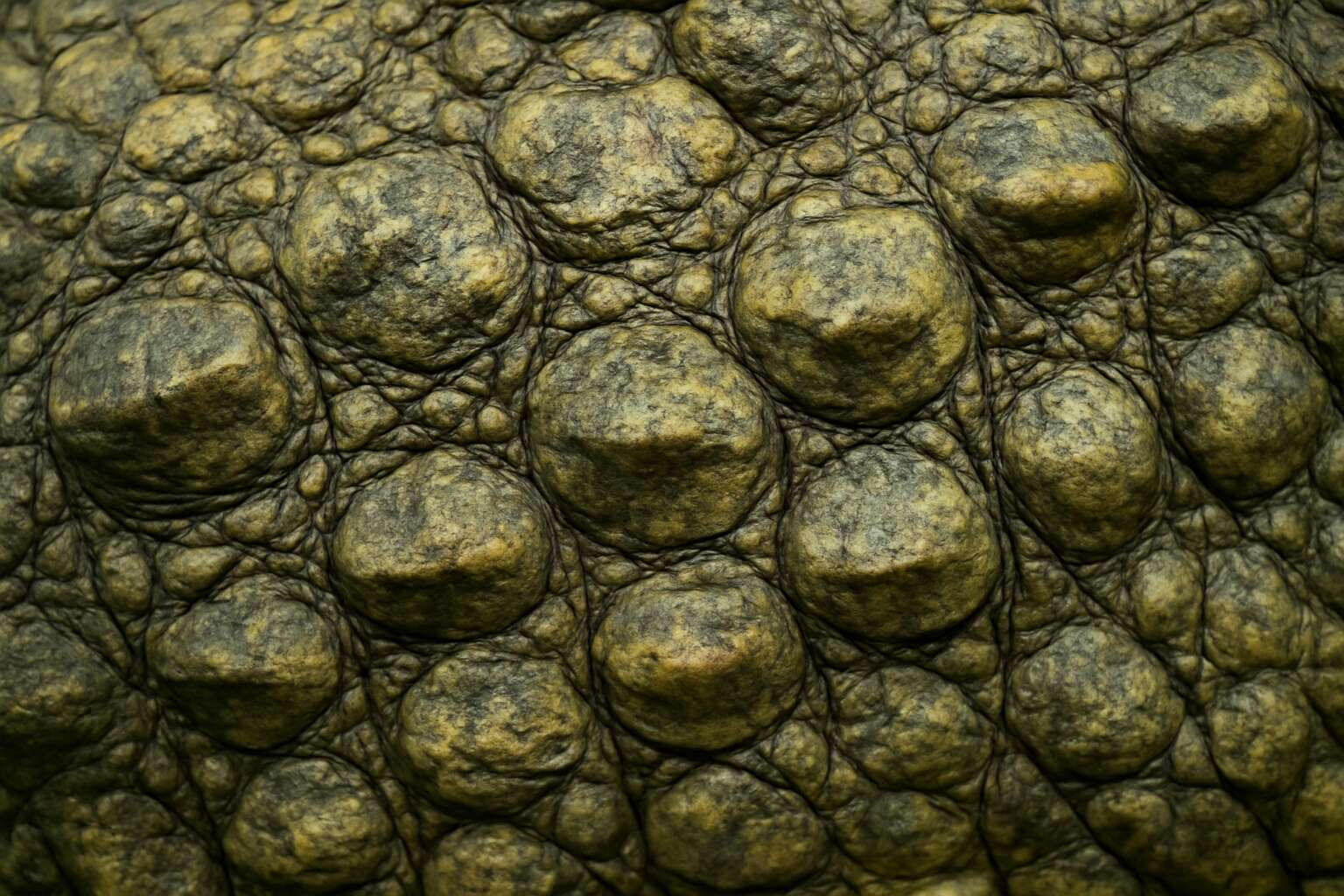
Crocodile skin anatomy and structure
Skin layers and keratinization
Across Southern Africa’s wetlands, the crocodile’s skin is less leather and more living engineering—a remarkable crocodile body covering that endures heat, bite, and mud with equal aplomb. Its armor isn’t static; it’s a dynamic, keratin-rich mosaic that tells a story of survival and design.
Crocodile skin anatomy centers on layered complexity. The outer epidermis hosts keratinized scutes that form a rugged, bite-resistant surface. Beneath, the dermis houses dense collagen and dermal osteoderms—bony plates embedded in tissue—giving the skin its characteristic ridges and strength. This arrangement supports abrasion resistance and flexible movement, while keratinization seals in resilience as the animal glides through water and scrubland alike.
- Epidermal keratinized scutes form the visible mosaic of the crocodile body covering.
- Dermal osteoderms add bone-like reinforcement.
- Dense collagen networks supply stiffness without sacrificing flexibility.
- Vascular channels support temperature regulation and rapid healing.
Scutes and bony plates (osteoderms)
Across South Africa’s wetlands, some crocodiles reach seventy years in the wild—the crocodile body covering is more than armor; it’s living engineering in action! The surface shows a rugged mosaic of scutes, while osteoderms beneath reinforce the frame without stifling movement. It shields, but it also flexes with river and reed.
- Scutes form the visible shield, a durable mosaic that deflects bites and abrasion.
- Osteoderms add bone-like reinforcement, embedded in the dermis for strength without rigidity.
In essence, this armor is industrial-grade biology—built to last, to move, and to endure. The design offers a quiet critique of mass-produced gear, showing how nature’s engineering survives where heat, bite, and mud converge.
Dermal-epidermal attachment
The crocodile body covering is more than armor—it’s a living hinge between muscle and scale. Beneath the rugged mosaic, the dermal-epidermal attachment acts as a quiet architect, anchoring epidermis to the dermis with a lattice of collagen, elastic fibers, and proteoglycans. This junction shrugs off heat, mud, and bite, letting the creature surge with river power!
Consider the key players:
- Basement membrane anchors the epidermis to the dermis, creating a stable yet supple interface
- Dense collagen weave transmits load while preserving bendability
- Elastic fiber networks restore shape after tides and lunge
- Proteoglycans and glycoproteins cushion and lubricate the contact zones
From riverbank to reed bed, this dermal embrace sustains the crocodile’s renowned endurance, weaving strength with stealth in South Africa’s wetlands.
Color, texture, and regional variation
Color is the crocodile body covering, a living spectrum that shifts with river light. In South Africa’s wetlands, hides range from sun-bleached olive to charcoal, with blotches that mimic the riverbed. This chromatic play isn’t decoration; it’s ambush in motion, a stealthy signal that helps crocs slip through reeds and water. A field note: pigment bands reveal where the creature hunts, rests, or waits in shade.
In SA’s wetlands, texture and hue mark habitat and behavior. The regions script a three-note pattern on the hide.
- Riverine olive with blotches for river margins
- Estuarine near-black with blue-tinge in tidal light
- Sandy gold with sunlit speckles in inland floodplains
The rough grain and subtle gloss of these patches catch the eye at strike, guiding camouflage as the creature slides into mud and reed. This skin, a tactile map of texture and color, underpins stealth along South Africa’s waterways.
Functions and purpose of the body covering
Protection and injury resistance
In South Africa’s rivers and wetlands, the crocodile body covering is living armor that keeps predators and jagged reeds at bay. It delivers protection and injury resistance when rivals bite or rough terrain tests its limits. That’s survival in action!
Think of it as a layered defense that pairs rigidity with give. We see a tough outer surface absorbing shock, while a supple inner layer cushions movement, letting the animal push through reed beds and bank edges with minimal wounds.
- Abrasion resistance against rocks and abrasive water channels
- Impact diffusion that distributes force along the body
- Low-profile texture reduces snagging and injury during rapid chases
These characteristics translate into durable performance in unpredictable Southern African waterways. Growth and renewal keep the covering intact, ensuring the animal stays protected across seasons, hunts, and long migrations.
Thermoregulation and moisture management
In the crocodile body covering, thermoregulation is the quiet engineer of survival. As ectotherms, crocodiles lean on the sun-warmed banks and cool river currents; the outer armor absorbs heat during basking, while the layers trap a buffer of air to slow heat loss when shadows fall. I’ve watched this system work with quiet precision across seasons—heat stored, moisture kept, life kept moving. The same skin’s low permeability helps conserve precious moisture, keeping hydration linked to the rhythms of South Africa’s wetlands and drought cycles.
- Heat storage from basking across durable skin segments
- Moisture retention helps endure long chases and dry spells
- Water-repellent surfaces reduce evaporation in hot riverbeds
Together, these traits weave a practical thermoregulatory toolkit for the crocodile body covering, enabling efficient energy use and steady hydration patterns across seasons in Southern African waterways.
Camouflage and prey capture
In the crocodile body covering, functions and purpose unfold like a patient ritual. Along South Africa’s wetlands the mottled hide acts as a hunter’s cloak, its texture and color merging with reeds, mud, and the river’s glassy sheen to erase the silhouette. This camouflage primes the predator for a precision-driven assault, turning stillness into a weapon and energy into momentum for a rapid, economical chase that respects the rhythm of the habitat.
- Blends with riverbank shadows and reflected light
- Disrupts outline during ambush at the water’s edge
- Supports stealthy transitions from glide to strike
I’ve stood at the bank and watched the patient hunter carve appetite from a quiet morning—every inch of crocodile body covering doing its quiet, relentless work, waiting for the perfect moment to strike.
Social signaling and display
The crocodile body covering isn’t merely armor; it’s a social instrument, a canvas that whispers age, health, and temperament in a silent dialect under the savanna sun. In South Africa’s wetlands, a single glint can settle a riverbank conversation. From the water’s edge to the reedbeds, its scales and subtle gloss read like a nonverbal résumé—signaling strength to rivals and suitability to potential mates. A quiet performance with practical goals, it’s efficiency dressed in epidermal couture.
Social signaling and display accompany every shimmer and scale twist, turning readiness into a message others can read at a glance.
- Visual cues of age, vigor, and territorial intent
- Shine and pattern that hint at health during courtship or greeting
- Posture and deliberate movement that broadcast restraint and confidence
In South Africa’s wetlands, that crocodile body covering remains a rolling ledger of status, a language learned by any observer sharing the bank.
Variation across crocodile species and habitats
Scute patterns and armor density
Across Africa’s wetlands, the crocodile body covering isn’t uniform. Armor density can vary by up to 25% across habitats—riverine, lacustrine, and estuarine forms adapt their scutes to local conditions. Impressive variation! Variation across crocodile species and habitats is evident in scute patterns and armor density.
- Habitat type influences scute density and plate overlap
- Ontogeny and growth shift armor density as juveniles mature
- Thermal regime and moisture stress mold texture and retention
In South Africa’s riverine habitats, larger, robust scutes resist flow and protect joints; in calmer waters, plates stay lean to ease movement and reduce overheating. That diversity marks a flexible record of adaptation.
Skin adaptations for freshwater versus marine environments
Across Africa’s wetlands, the crocodile body covering reveals a living atlas of adaptation, with armor density shifting by up to 25% from riverine to estuarine habitats. This is function sculpted by current, salinity, and shade.
Variation across species and habitats tunes the crocodile body covering in texture and plate overlap to local demands, turning each spine and jawline into a seasonally tuned instrument for movement in freshwater and near-coastal brackish realms, even along South Africa’s riverine shores.
Here are quick notes on freshwater versus marine skin adaptations:
- Textures that promote humidity exchange and cooling.
- Brackish estuarine zones reward a balance between moisture retention and flexibility.
- Marine-adjacent skins show reinforced outer layers to resist salt and abrasion.
Age-related skin changes and growth
Across Africa’s wetlands, the crocodile body covering reads like a living atlas. Variation across species and habitats is dramatic: riverine crocs wear lean, streamlined armor, while estuarine kin display denser plates forged by salt and spray. This shimmering cloak grows with the seasons, a weathered testament to a life lived under sun and current!
Age-related skin changes and growth sculpt the crocodile body covering from hatchling to elder, refining texture and overlap as needs shift with size and hunting rhythms.
- Hatchlings: tight scutes and high mobility.
- Juveniles: increasing plate spacing and flexibility.
- Adults: thicker outer layers to resist abrasion and salt.
In South Africa’s rivers and coasts, these patterns tell a larger story of adaptation, turning climate into a tutor for texture and tone. The crocodile body covering remains a living archive, a mythic shell that meets heat, humidity, and opportunity with equal grace.
Impact of climate and habitat on skin texture
Across Africa’s wetlands, the crocodile body covering reads like a living atlas. Variation across species and habitats is dramatic: riverine crocs wear lean, streamlined armor, while estuarine kin display denser plates forged by salt and spray. This shimmering cloak grows with the seasons, a weathered testament to a life lived under sun and current!
Climate and habitat tune texture just as surely as river depth changes with the tide. In freshwater systems, smoother, more flexible plates ride the heat; in brackish estuaries, salt-laden spray hardens outer layers and deepens color.
- Riverine habitats favor lean, agile armor with greater mobility.
- Estuarine zones push denser bone plates to resist salt and spray.
- Seasonal shifts drive subtle changes in texture and sheen.
In South Africa’s wetlands, that cloak becomes a map of climate, current, and chance—the glossy, living shell that faces heat, humidity, and opportunity with grace.
Care, conservation, and ethical considerations
Pollution effects on skin health
Armor that outlives empires, the crocodile body covering is a living ledger of South Africa’s river lanes. “The skin is the river’s oldest ledger,” notes a field naturalist, and it records seasons, storms, and silent threats alike.
Care for this natural armor begins with reverence for its home: intact wetlands, clean waterways, and undisturbed roosting sites. Ethical considerations thread through every encounter—traceable sourcing, humane handling, and transparent trade that funds wetland conservation.
- Pollution in waterways can irritate the skin and weaken the dermal barrier.
- Ethical sourcing and conservation funding support habitat protection and reduce health risks in wild populations.
- Pollution control and clean-water initiatives help maintain the moisture and mineral balance essential to scutes.
In South Africa’s wetlands—from the Kruger margins to tidal estuaries—stewardship stitches science and storytelling, keeping the crocodile armor resilient while reminding communities that beauty carries responsibility.
Captivity welfare and skin care
“The skin is the river’s oldest ledger,” a field naturalist notes, and the crocodile body covering holds a living record of South Africa’s waters—the seasons, storms, and threats hidden in every scale. Care for this armor begins with home: intact wetlands, clean waterways, and humane, traceable encounters that fund conservation. In sanctuaries and responsible facilities, welfare and ethics thread through every decision, quietly shaping a more hopeful story.
- Humane care standards and environmental enrichment in captivity
- Regular veterinary oversight and skin health monitoring
- Transparent provenance and humane handling that support conservation funding
These principles honor the creature while linking local communities to a shared river future—where care and conservation coexist as a single, enduring craft.
Trade, use of skin in products, and conservation
In South Africa’s wetlands, a crocodile body covering is more than armor—it’s a ledger in the river’s economy. We see legal, traceable trade funding wetland guardianship and livelihoods, even as wild populations are stewarded for future generations.
Care and conservation hinge on ethical trade: provenance, humane handling, and responsible processing that respect animal welfare and the ecosystems they depend on.
- Provenance certification and humane handling that ensure traceability
- Transparent supply chains that fund conservation efforts
- Ethical tanning and product integrity to prevent cruelty
When these threads are woven with care, the crocodile body covering becomes a bridge—linking communities, markets, and river health in a single enduring craft.
Non-invasive study methods of skin in the wild
In South Africa’s wetlands, the crocodile body covering tells a river’s ledger—care, craft, and resilience etched in scale. A guide once whispered, “the river keeps score in every scar.” From a respectful distance, I watch skin reveal health and history, while communities trust that ethical trade sustains both animals and livelihoods.
Non-invasive study methods of skin in the wild offer clues without contact.
- Remote, non-contact photography and videography to document color, texture, and scute patterns.
- Drones and fixed hides for repeatable, long-term observation of moisture and armor in action.
- Environmental DNA (eDNA) and water sensors to infer health indicators from the habitat itself.
These gentle approaches align with conservation goals, proving that care, science, and community can walk the same river path.
Comparative dermal structures across crocodilians and relatives
Crocodile vs alligator skin differences
Across the crocodilian family, the crocodile body covering functions as a living archive of form and function. The dermal mosaic blends epidermal scales with embedded osteoderms, creating armor that breathes with movement and age. It is a whisper of evolution: tough enough to take punishment, flexible enough to hunt, and subtly tuned to habitat across South Africa’s wetlands. When we compare crocodile skin to that of alligators, the differences emerge not as contradictions but as refined variants of a shared strategy—the same toolkit adapted to different lives.
Key contrasts in the crocodile body covering include:
- Osteoderm density and scute patterns—a rugged back shield.
- Scale morphology and texture—keeled plates that reduce drag.
- Dermal-epidermal attachment and skin flexibility—tenacity for growth.
These nuances remind us that skin is more than cover; it’s a life strategy stitched into each scale and plate.
Dermal structures in related reptiles
Across the crocodilian family, the crocodile body covering stands as a living archive of form and function. The dermal mosaic blends embedded osteoderms with epidermal scales, creating armor that breathes with movement and age. Tough enough to endure punishment, flexible enough to strike, it’s finely tuned to South Africa’s wetlands—a practical sculpture formed over generations.
Comparative dermal studies across crocodilians and related reptiles reveal how a single strategy morphs to new terrains. In related species, dermal structures show shifts in mineralization, keratin types, and bone-skin integration that echo habitat pressures.
- Osteoderm density and arrangement
- Scale microstructure and keeled versus flat plates
- Dermal-epidermal attachment strength
- Pigment cell distribution and color dynamics
These nuances affirm the crocodile body covering as a living design test bed—rigid armor where needed, supple skin for reeds and water. In South Africa’s landscapes, that balance informs conservation, craft, and curiosity.
Evolution of integument in archosaurs
Across Africa’s rivers and wetlands, crocodile body covering has endured nearly 200 million years of selective shaping. This living armor is not merely a shield; it is a biography etched in scale and bone, a dialogue between aggression and grace that has persisted through flood and drought.
Comparative studies among crocodilians and their archosaur cousins reveal how a single strategy morphs to meet shifting terrains. Some lineages push mineralization into patches, others sculpt keratin layers that bend without snapping; the interface between dermis and epidermis acts like a hinge, balancing rigidity with the capacity to coil and strike.
From the reed beds of South Africa to the watercourses of the Eastern Cape, these dermal designs inform both conservation and craft. The story of archosaur integument is a study in patience, where texture, strength and subtle coloration harmonize with habitat, offering a lens into how living skins adapt and endure.
Fossil evidence of skin covering in ancient crocodilians
Across South Africa’s rivers and wetlands, the crocodile body covering persists as a living record of time. Fossil impressions push the tale back to roughly 210 million years, a durable ledger of heat, water, and predation. This armor is not mere protection; it is a biography traced in scale and bone, a dialogue between power and patience.
Among crocodilians and their archosaur kin, dermal structures range from dense osteoderm mosaics to keratinous envelopes that bend yet resist snapping. The interface between dermis and epidermis acts like a hinge, tailoring rigidity to riverine pursuits and the stealthy strike that follows a long, patient float.
- Fossil skin impressions reveal patchwork patterns along the back and limbs.
- Osteoderm mosaics show denser coverage in aquatic lineages.
- Keratin remnants suggest a flexible armor that can bend without cracking.

0 Comments